
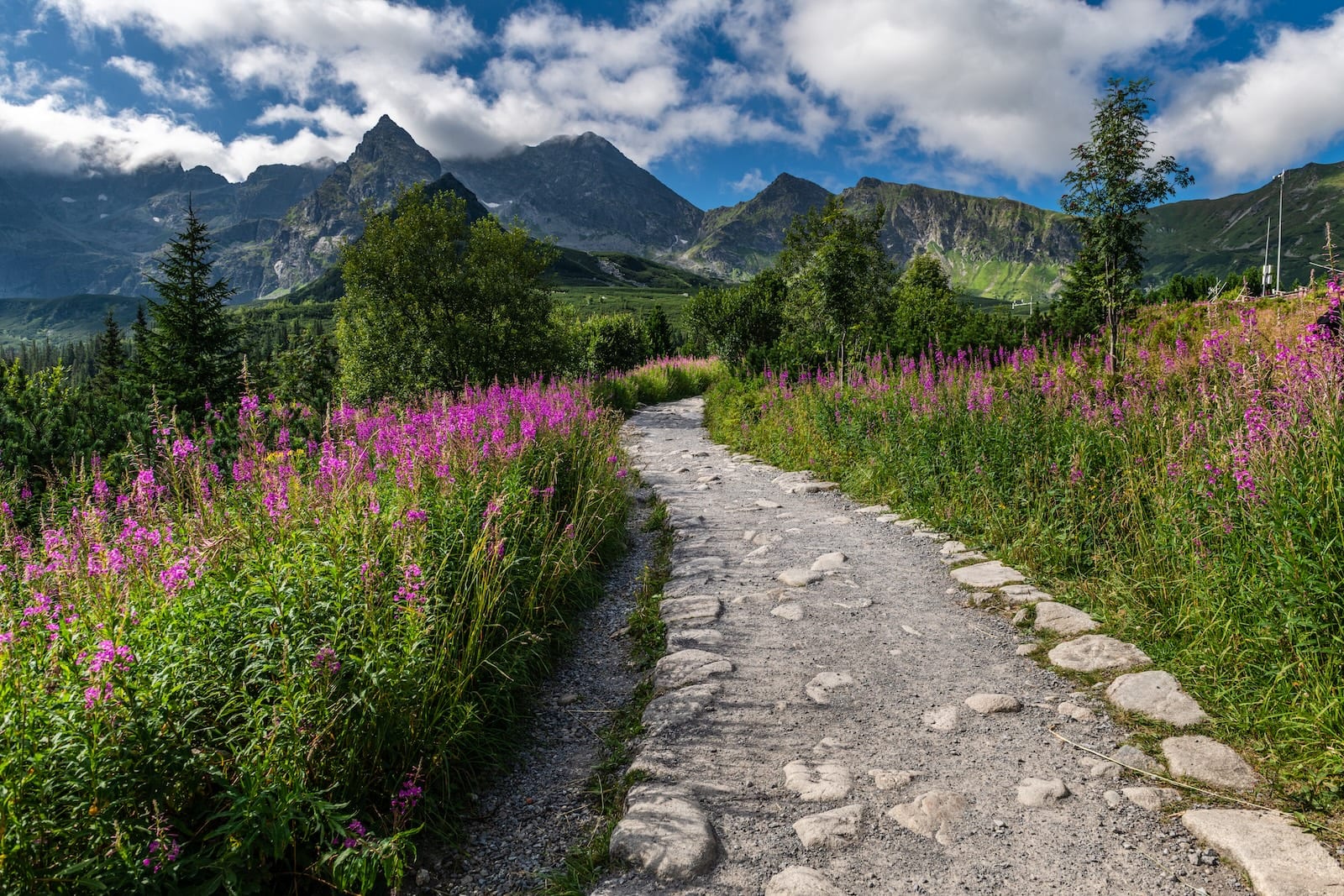
You lace up your shoes. You open the app. You select a trail, tap “start,” and immediately the data collection begins. Steps. Pace. Elevation gain. Heart rate zones. The trail hasn’t even started yet and you’re already behind.
Sound familiar? You’re not alone. Somewhere along the way, hiking got gamified. What started as one of the most ancient forms of human movement just walking through the world, looking at things became another optimization project. Another way to measure, improve, and perform.
This post is a gentle argument for something different. For the no-goals hike. For lacing up and going outside with absolutely nothing to prove.
The trail has been there longer than your step count. It will be there after the app closes. It doesn’t need your data to be extraordinary.
How did the Focus Change
It’s worth understanding how this happened, because it didn’t happen overnight. Fitness tracking went mainstream in the early 2010s and brought with it a new cultural story: that movement only counts if it’s measured. That a walk without data is a walk wasted. That you should always be pushing toward something, more miles, more elevation, faster pace.
Apps like AllTrails are genuinely wonderful for finding trails and staying safe. But they also turned hiking into a performance, complete with public logs, leaderboards, and the subtle pressure to prove you were out there. Even our rest days started needing to be optimized.
The counter-movement is already underway. Across wellness communities on Reddit, Substack, and beyond, people are talking about reclaiming movement that doesn’t require an audience including the internal audience of your own metrics dashboard. “Walking without step counts” is trending not as a rejection of health, but as a deeper understanding of what health actually feels like.
What Actually Happens When You Leave the Tracker Behind
When you stop measuring, something quietly opens up. Your attention, which was partially occupied monitoring numbers and notifications, becomes available for the trail itself. You start noticing things. The way a creek sounds different around a bend. The specific green of lichen on a south-facing rock. A bird you’ve never slowed down enough to actually look at.
This isn’t just poetic, there’s real science underneath it. Attention Restoration Theory suggests that natural environments help replenish the directed attention we exhaust in daily life, but only when we allow the brain to shift into what researchers call “soft fascination.” That gentle, wandering attention you get when you’re not trying to accomplish anything. Checking pace every thirty seconds short-circuits it completely.
A 2025 review of hiking research found that nature-based walking reduced rumination, lowered anxiety, and improved mood, effects that are strongest when the walk is slow, unstructured, and phone-light. The trail heals when you let it.
Soft fascination is your nervous system finally exhaling. The trail is the best place to find it.
What To Bring Instead of a Step Goal
A no-goals hike doesn’t mean an empty hike. It just means trading data for presence. Here’s what we’d suggest packing instead:
- A sketchbook or nature journal. Give your hands something to do that isn’t scrolling. Stop when something catches your eye a mushroom, a shadow, a twist of bark and spend five minutes with it. You don’t need to be an artist. You just need to look.
- One question to carry. Not a to-do list. Not a problem to solve. Just one open question to let your mind wander around. What am I grateful for today? What’s been weighing on me? What do I actually want? The trail has a way of loosening answers you didn’t know were ready.
- A snack you genuinely love. Sounds small. Changes everything. Sitting on a rock with something good to eat, no destination in mind, is one of the most underrated wellness practices available.
- One earbud out. Or both. The soundscape of a trail, wind, water, birdsong, your own footfall on dirt is doing something for your nervous system that a podcast can’t replicate. Give it a chance.
- Permission to stop at any time. For no reason. For as long as you want. Because something was interesting. Because you’re tired. Because the light just did something beautiful on the water. Stopping is not failing. Stopping is the whole point.
The Science of Slowing Down
Slow hiking, sometimes called “mindful hiking” or even forest bathing when it happens among trees, is having a serious scientific moment in 2026. Research on shinrin-yoku (the Japanese practice of spending time among trees) has documented measurable reductions in cortisol, blood pressure, and inflammatory markers after as little as 20 minutes of slow, intentional time in a forested environment.
What’s interesting is that the benefits appear to require the slowness. Fast hiking through a forest doesn’t produce the same nervous system response as slow, attentive time in one. The body’s stress-recovery mechanisms seem to need a certain pace or more accurately, a certain quality of attention to activate fully.
For the creatively inclined, there’s another layer worth noting. Stanford researchers found that walking increases creative thinking by up to 60%. The no-goals hike is quite literally thinking time. Problem-solving time. The kind of unstructured mental space where connections form and ideas surface that never would have appeared at a desk.