
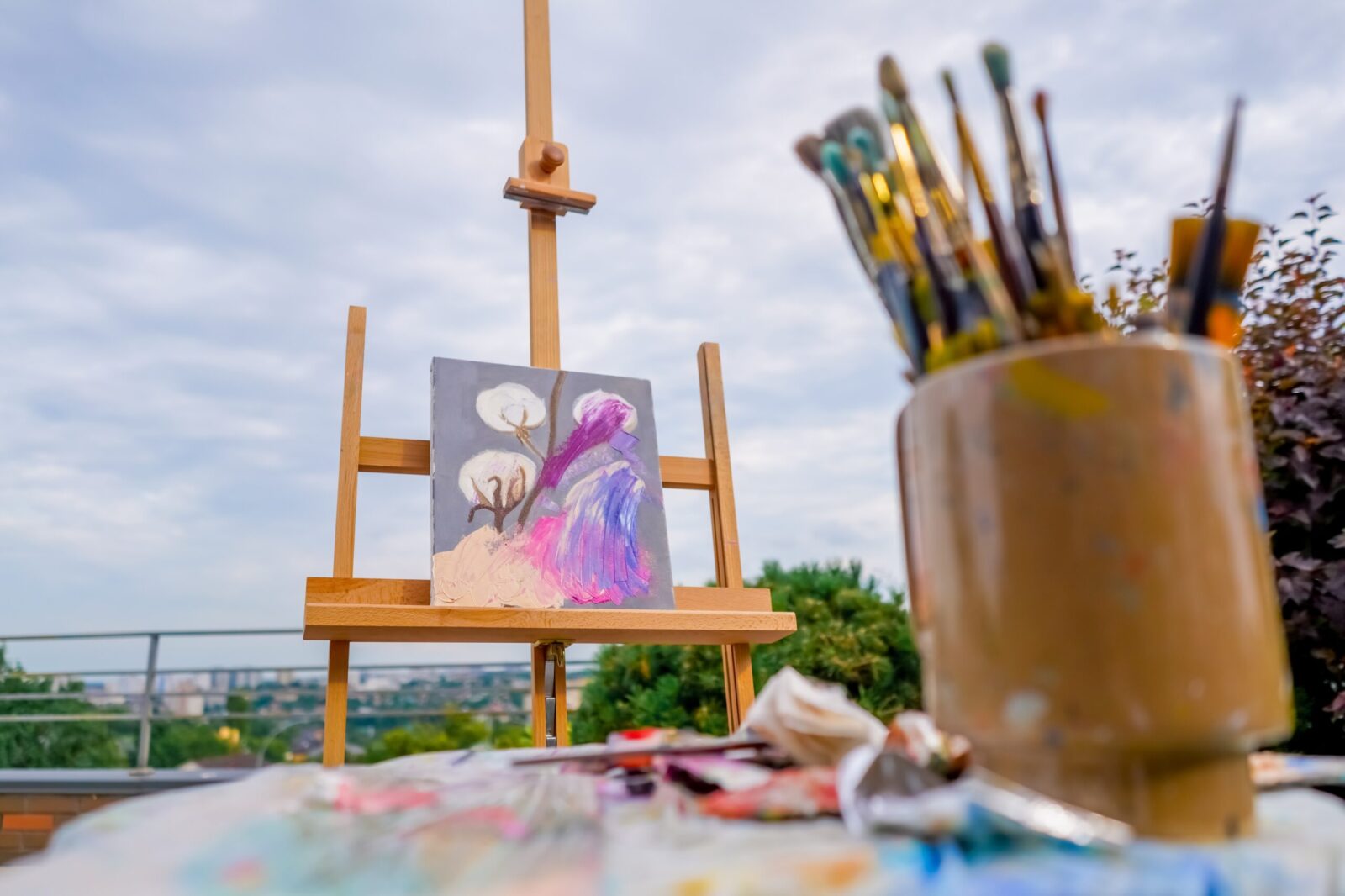

Sit somewhere beautiful with a small watercolor set in your lap and something happens that is genuinely hard to predict until you try it. The thing you thought you were doing, making a painting, turns out to be almost beside the point. What you’re actually doing is looking. Really looking, in the way you almost never look at anything anymore, because the painting requires it.
This is what traveling to paint does that a painting class or a weekend workshop never quite replicates. The trip changes the painting. But it changes the travel more.
When finding a subject is the reason you came, you start seeing differently in the days before you ever open your sketchbook. Which direction the mountains face. How light moves across the water in the late morning. Which hillside catches the last warmth of the afternoon. You stop moving through a place and start actually being in it.
The research on why the combination works is getting more specific. A 2025 University of York study found that pairing creative practice with time in natural settings produces wellbeing benefits that neither produces as well alone, including flow state, reduced emotional stress, and meaningful increases in psychological wellbeing. Plein air painting specifically promotes a sustained state of focused attention that is harder to access in studio settings: the changing light creates natural time pressure, the outdoor environment demands full sensory engagement, and the whole enterprise forces a quality of presence that most people spend a great deal of effort trying to find through other means.
You get it for free when fjord mist is rolling in and you have twenty minutes before the light changes entirely.
Norway — The Fjords
Artists have been coming to paint Norway’s fjords since the early 19th century. Johan Christian Dahl, considered the founding father of Norwegian landscape painting, made his first major fjord works after traveling through the western coast in 1826, and painters have been returning ever since. What draws them is still the same thing it was then. The Sognefjord and Hardangerfjord corridor is vast enough that several side-fjords branch off from the main bodies, each with its own light and microclimate. The mountains cast shadows that move across the water throughout the day. The sky’s color lives in the fjord surface underneath. You cannot hold the whole thing in your field of vision, which means you have to choose what matters. That act of choosing, what to simplify, what to leave out, what to actually look at, is where plein air begins. It is also where something shifts in how you understand the place you are in.
The practical case for Norway: in late spring and early summer, the fjord region has 18 to 20 hours of usable light. Golden hour stretches to two or three hours rather than 45 minutes. The pace of painting changes completely when you are not racing the sunset.


New Zealand — Fiordland and the South Island
The challenge in New Zealand is not finding something to paint. It is choosing. Glenorchy and Milford Sound are among the most frequently named destinations in the plein air community for New Zealand painting specifically, drawing painters back for the scale and the quality of the southern light. Fiordland is different from Norway in feel: more moisture in the air, the greens going into blues and blacks before they reach the water, the colors more diffuse in a way that rewards a careful palette and exposes an impatient one.
Glenorchy at the head of Lake Wakatipu tends to be quieter than Milford Sound and just as worthwhile. The mountains reflect in the lake at a scale that makes the composition almost impossible to get wrong. The early morning light there runs amber in a way that does not happen often at this latitude. Worth getting up for.
Hawaii — Kauai’s North Shore
Kauai differs from the other two destinations in one specific way: the best of it has to be earned. The Kalalau Trail, the only land access to the full Na Pali coastline, covers 11 miles of technical terrain one way with significant elevation change and sections where the trail drops sharply toward the ocean. This is not a casual day trip. It is exactly the kind of destination where the effort of getting there changes what you see when you arrive.
For those who prefer access over expedition, the north shore from Hanalei is extraordinary on its own terms. The Napali ridgeline visible from Ke’e Beach changes color four or five times in a single morning as cloud cover moves over the peaks. Kauai’s palette, those blues and greens, sits in a range that watercolor handles particularly well, which is part of why the island has drawn watercolor painters for generations. The humidity slows drying time in ways that surprise you. The whole experience rewards looseness over control, which turns out to be good practice for most things.

You Do Not Have to Be an Artist to Do Any of This
The barrier to plein air painting outside of a formal art practice is a pocket watercolor set, a small sketchbook, and a willingness to sit still somewhere worth sitting still. The painting that comes out the other end is beside the point. The practice of looking, at how a fjord carries the sky in its surface, at the weight of mist in a New Zealand valley, at the way Kauai’s ridgeline holds color after the sun moves off it, is the whole thing.
The painting is just evidence that you were paying attention.
At Hike & Hue Travel, we plan trips to all three of these destinations, built around both trail access and time. Not itineraries that move you past the painting spots. Trips where the landscape is the point, and getting there is already part of the practice.