
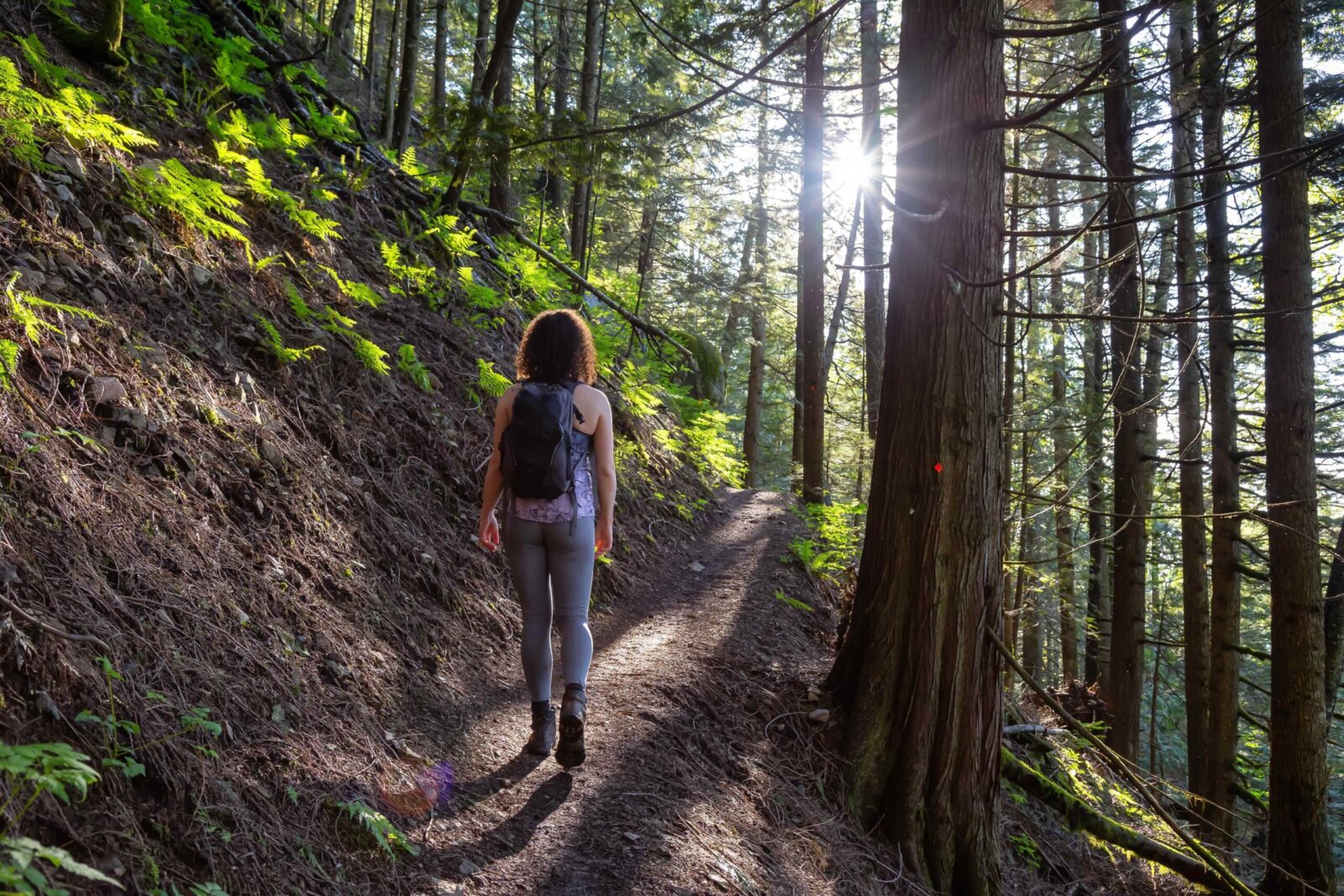
There is a Japanese practice called Shinrin-yoku. It translates, roughly, to forest bathing. And despite what the name might suggest, it has nothing to do with getting wet.
Shinrin-yoku means walking slowly in a forest. Breathing the air. Letting your senses open. Not hiking to a destination. Not tracking your pace. Simply being in the presence of trees and letting that presence do what it seems to naturally do to the human nervous system.
The practice was formalized in Japan in the 1980s and has since become one of the most studied nature-based wellness interventions in the world. The science behind it is genuinely remarkable. And here at Workout Artist, we think it becomes even more interesting when you bring a sketchbook.
You don’t have to do anything in a forest except be there. That turns out to be enough to change something in your body.
What The Research Shows
The evidence on forest bathing has been building for years. A landmark study published in Environmental Health and Preventive Medicine examined participants across 24 forests in Japan and found measurable reductions in salivary cortisol, blood pressure, and pulse rate after time in forested environments compared to urban settings. Cortisol, the body’s primary stress hormone, dropped by more than 13% just from viewing forest landscapes, and by nearly 16% after walking among trees.
A 2024 study in Frontiers in Psychology followed stressed participants through two full days of forest immersion and found significant improvements in heart rate variability, a key marker of nervous system resilience, alongside measurable drops in cortisol. The body, in the presence of forest, appears to shift from a state of activation to a state of genuine rest.
A 2025 review published on PubMed went further, finding that forest bathing is associated with enhanced natural killer cell activity, shifts toward parasympathetic dominance in the autonomic nervous system, and emerging evidence of benefits for
cognitive restoration and emotional regulation. Researchers attribute part of this to phytoncides, the natural compounds released by trees, which appear to have direct effects on immune function when inhaled.
This isn’t wellness marketing. It’s a growing body of peer-reviewed research that points consistently in the same direction: forests are genuinely good for the human body in ways that are now measurable.
What Slowing Down Actually Requires
The key distinction between a forest walk and forest bathing is pace and intention. Hiking moves through a forest. Forest bathing receives it.
In practice, this means leaving your earbuds at home. Putting your phone in your pocket. Walking slowly enough that you notice things you would normally pass. The quality of light on bark. The way sound travels differently in dense canopy. The smell that changes when you cross from open trail into shade.
Researchers describe the mechanism through something called Attention Restoration Theory, developed by environmental psychologists Rachel and Stephen Kaplan. The theory holds that natural environments engage what they called soft fascination, a gentle, effortless form of attention that requires nothing from us. The brain, which spends most of its day in effortful directed attention, is essentially given a rest. And in that rest, something tends to repair.
The practice doesn’t demand much. Most research suggests that the physiological benefits begin within 20 minutes. You don’t need to go deep into wilderness. A stand of mature trees in a city park can produce measurable effects. The key is the slowness and the presence.
Forest bathing asks only one thing of you: that you stay long enough to let the forest actually reach you. That usually takes about 20 minutes.

Why A Sketchbook Belongs Here
Here’s what we’ve found, and what we think makes the Workout Artist version of this practice distinct.
Forest bathing on its own is restorative. But adding a creative act to it does something additional. When you sit down with a sketchbook in a forest, you give your eyes a specific job: really look at this one thing. Not the whole scene. Not the view. This particular branch. This patch of moss. The way the light is hitting the undergrowth at this exact moment.
That act of directed observation is both creative and contemplative. It anchors you to the present in a way that passive walking doesn’t always manage. And research supports the combination: a 2025 neuroimaging study found that engaging with art in natural settings produced meaningful positive emotional and stress-recovery responses beyond what either activity produced alone.
You are not trying to make a finished painting. The sketchbook is just a reason to stop and a tool for looking. A five-minute sketch of a single root system teaches you more about that root system than an hour of walking past it would.
How To Actually Do It
There is no complicated method here. The practice is genuinely simple.
Find a forest, or something close. A stand of trees, a park with old growth, a wooded trail. The Association of Nature and Forest Therapy has a guide finder if you want a supported experience, but you don’t need a guide to begin.
Leave your earbuds behind. Walk slowly. Breathe. Let your eyes move without purpose for the first ten minutes. Don’t try to notice anything in particular. Just let the forest be there.
When something slows your feet, and something will, stop. Look at it for longer than feels comfortable. If you have a sketchbook, open it. Make a loose gesture drawing of what you’re seeing. It doesn’t need to be accurate. It doesn’t need to be finished. You’re just extending the moment of contact with that one thing.
Stay for at least 20 minutes. Ideally 40. Come back to the same spot across different seasons if you can. The forest changes and so do you, and paying attention to that change over time is its own kind of practice.
The Connection To Restore
At Workout Artist, forest bathing and sketching sit at the intersection of two pillars: Create and Restore. The creative act is there. So is the rest.
This is the kind of practice the brand has always believed in: movement and creativity and stillness all happening at once, in the same hour, in the same woods. You walk to get there. You stop to look. You make something small from what you find. And you come back different in a way that’s hard to describe but easy to feel.
The forest has been doing this for longer than any wellness trend. You just have to show up and stay long enough for it to work.