
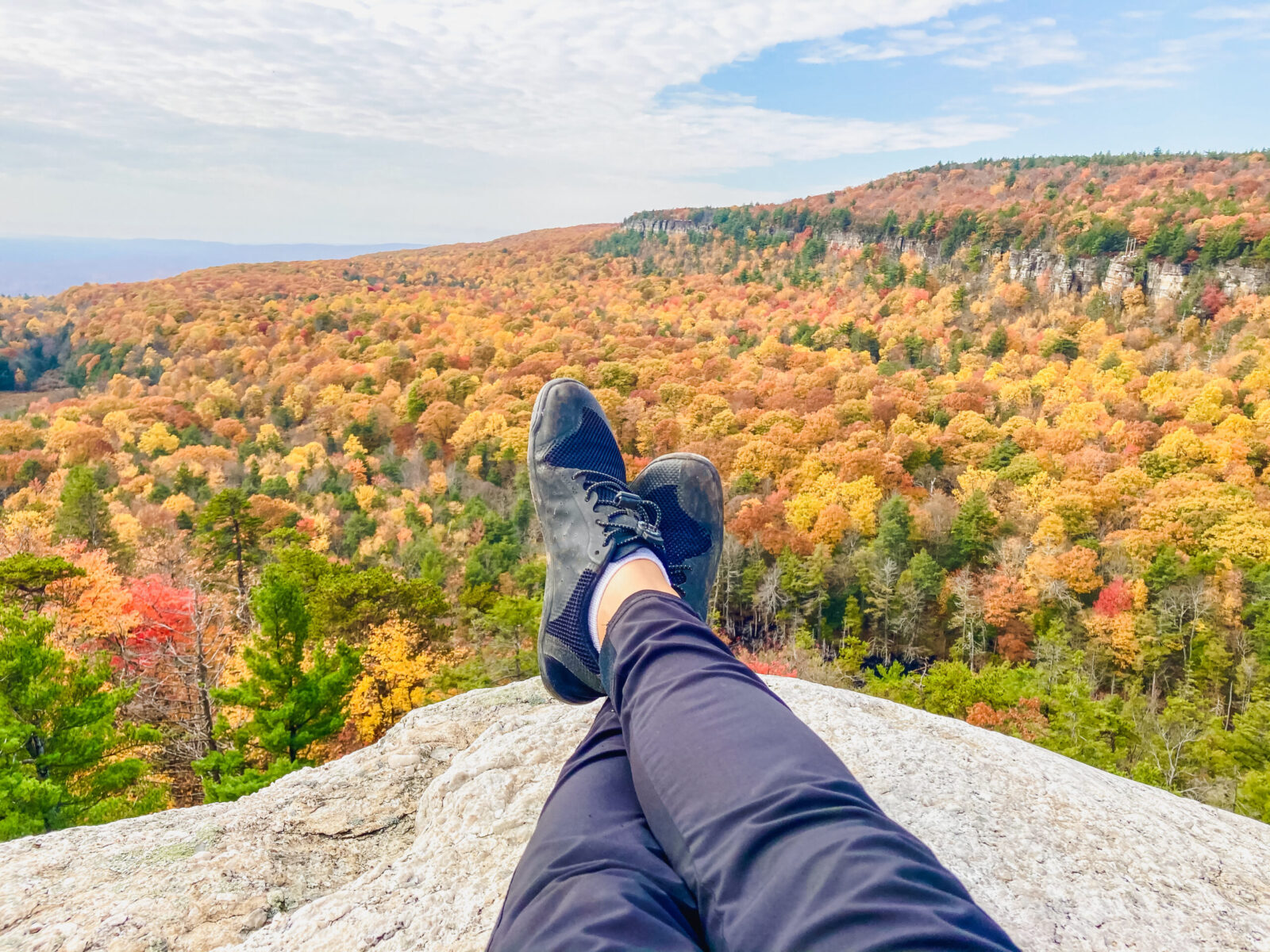
If you’ve ever come back from a trail walk with an idea you didn’t have when you left, you already know this.
Something happens to the creative mind in motion. The rhythm of walking, the sensory richness of being outside, the absence of the screen and the desk and the to-do list, these things don’t just relax you. They open something. Ideas surface that were sitting just below the reach of your directed attention all week.
Stanford researchers studied this formally and found that walking increased creative output by an average of 60 percent compared to sitting. Walking outside produced the most novel ideas. But what the research couldn’t quite capture is the texture of that experience, why it happens, what it feels like, and how to invite more of it deliberately.
These three practices are designed for people who make things, or who used to make things and want to find their way back. None of them require experience with mindfulness or art. They just require showing up on a trail with a little less in your hands and a little more space in your attention.
“The hike and the creative practice aren’t separate activities that happen to share a day. They’re the same practice expressing itself through different senses.”
THE SENSORY WALK
This is the practice of walking without a destination in mind, with the specific intention of noticing.
Not noticing everything. Just whatever your senses keep returning to. The particular quality of light at this hour. A sound you can’t quite identify. The way the air smells different near water than it did a quarter mile back. The texture of bark on the tree you’ve walked past twenty times without ever actually touching.
Leave your earbuds out. Walk slowly enough that you could stop at any moment without breaking a stride. Don’t try to remember what you notice. Just let it in.
What you’re doing here is feeding the part of your creative brain that doesn’t run on deadlines or intentions. The part that synthesizes, connects, and generates. It needs raw material. Sensory experience in natural environments is among the richest material available, and most of us are so busy covering ground that we forget to collect any of it.
Even twenty minutes of this, once a week, changes the quality of the creative work that follows. Artists throughout history have known this instinctively. Now there’s a body of research to confirm it.
At some point on every hike, stop. Not because you’re tired. Not at the designated viewpoint. Just wherever you are when you feel the impulse to stop. Sit down if you can. Stay for five minutes without doing anything.
No sketching, no journaling, no checking the time. Just the place and your presence in it. Let whatever is happening around you happen. Let your breathing slow down. Let the background noise of your own thinking fade the way background noise does when you sit in a room long enough.
What tends to arrive in that quiet is often exactly what you were looking for before the hike started. The solution to the creative problem. The clarity on the decision. The line of the poem or the composition of the painting. Not because you forced it. Because you gave it room.
This isn’t mystical. It’s what attention restoration theory predicts: when directed attention is given a rest, cognitive function and creative capacity recover. The trail provides the conditions. The pause allows them to work.
Nature doesn’t ask your brain to focus. And your brain, finally not being asked, starts to recover.
THESE PRACTICES WORK TOGETHER
You don’t have to choose between them. A hike that begins with sensory walking, pauses for a few journal sentences when something earns them, and ends with five minutes of deliberate stillness is a complete creative practice that happens to involve covering ground.
It’s also a complete wellness practice. And a form of moving meditation. The fact that it’s all of these things at once is exactly what makes it worth doing regularly.
If you’re someone who used to make things and stopped, or someone who makes things but feels creatively depleted, this is where you start. Not with new materials or new techniques. With a trail, some attention, and a willingness to slow down enough to actually receive what’s there.
The creative mind was always going to find things worth making. It just needed somewhere quiet to look.