
Most guides to Norway’s fjords tell you the same thing: summer is peak season, shoulder season is quieter, winter is for Northern Lights. All of that is accurate. It is also almost entirely beside the point if you are going to hike and paint.
If the trail and the sketchbook matter equally, two windows work. They are excellent for completely different reasons.
June and Early July: The Extended Light
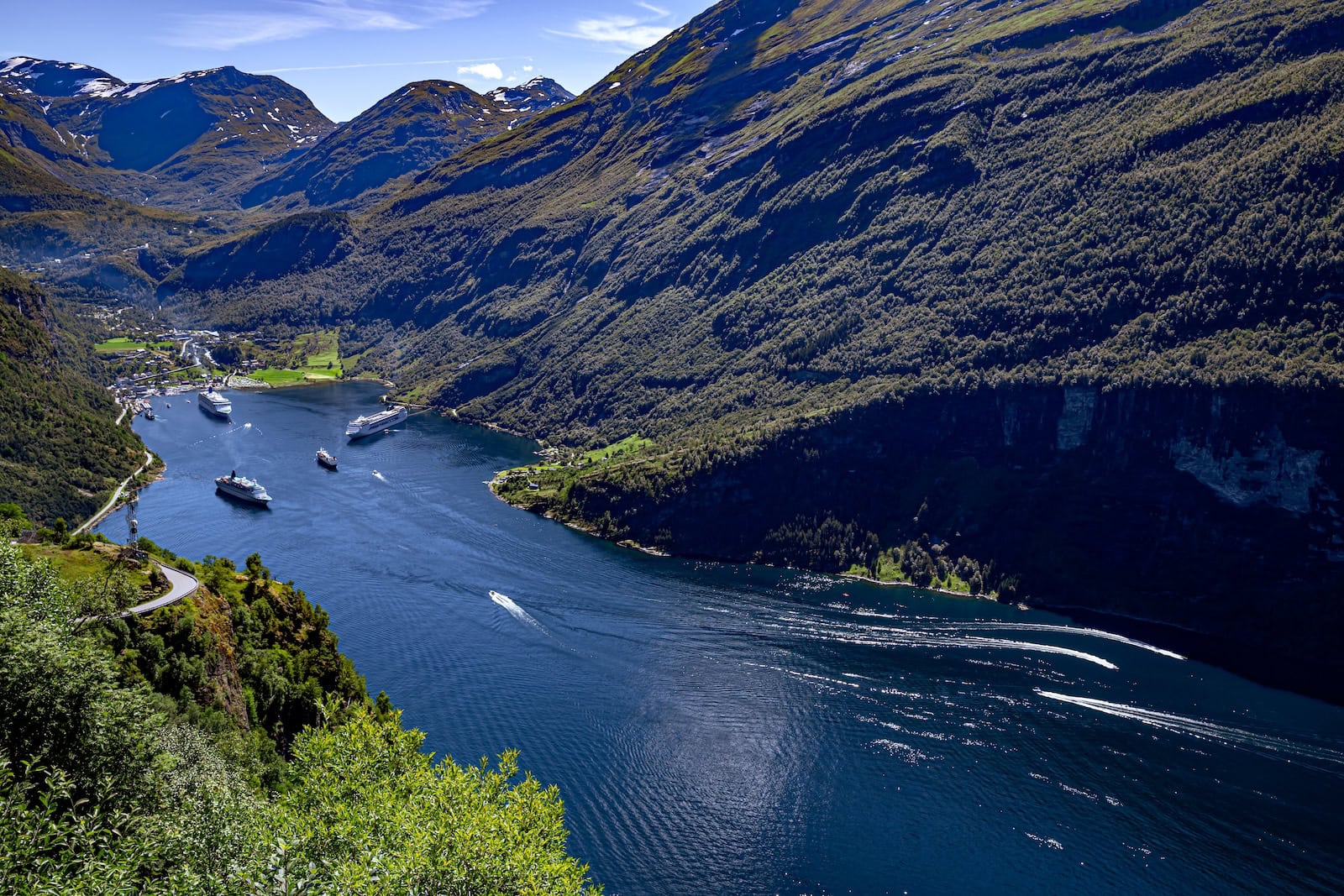
Something happens to the light in the western fjords in late June that painters have been describing the same way for two centuries. Golden hour, which lasts 45 minutes on a good day almost anywhere else, stretches to two or three hours. The sun moves toward the horizon without reaching it, casting long lateral light across the water. The fjord surface carries the color of the sky in miniature below the cliffs. The mountain views look like sunset but simply refuse to fade.
For plein air painting, the extended light is the practical advantage. Watercolor rewards fast, loose observation. But working with light that shifts slowly enough to actually follow gives you something that most locations never offer. You have time to choose your subject, block in the broad shapes, let the painting find itself rather than racing the window.
The best months for fjord hiking are July and August, with trails mostly snow-free, ferry connections frequent, and daylight generous. This is also when the famous routes are fully reliable. Trolltunga in Hardanger crosses alpine terrain with stream crossings and boulder fields that remain snow-covered well into June, so early July is the safer starting point for that route.
The trade-off is real and worth stating plainly. Crowds peak midday in July and August on the famous trails. Starting before 8am or in the late afternoon reduces congestion, but Trolltunga is one of Norway’s most photographed destinations and you will not have it to yourself regardless of timing. For a painter, this matters more than for most hikers. Sitting still for two hours on an exposed rock ledge is a different proposition when that same ledge has fifty other people rotating through it.
September: The Season That Earns Its Reputation Quietly
If June and July are for light duration and trail access, September is for everything else.
Norway in September feels like the mountains finally exhale after a hectic summer. Crowds thin. The famous trails go quiet in a way that changes how they feel. You move through a landscape instead of queueing through it.
The light shifts too, and not in a lesser direction. By late August into September, sunsets start returning, long and slow, painting the sky in gold and pink. For the plein air painter, this is a different palette from June and a paintable one in its own right. The summer greens are moving toward amber and ochre. The birch trees above the treeline are going gold against dark evergreen slopes. The waterfalls are at full volume from months of summer rainfall. The fjord surface, lit by the returning sunset angle, carries warmth in a range that watercolor handles particularly well.
Autumn from September into early October offers cooler, stable conditions and some of the best hiking of the year, with far fewer crowds than the summer peak.
The practical limit: Trolltunga closes when early snow arrives, and that timing varies year to year. September is reliable into mid-month. Beyond that, trail conditions need checking before you go.
The Routes Worth Planning Around
Trolltunga in Hardanger is the signature commitment. 28 kilometers round trip, 10 to 12 hours return, covering around 1,000 meters of elevation gain across alpine terrain with stream crossings and boulder fields. Worth every hour. Plan for a full day and an early start regardless of season.
The Husedalen Valley trail is the less-famous route that earns its place quietly: a walk through one of Norway’s most concentrated waterfall landscapes, with four distinct falls spaced across a 5 to 6 hour round trip. Tveitafossen, Nykkjesøyfossen, Nyastølsfossen, Søtefossen. Less crowded than Trolltunga and more paintable, given the constant movement of water and the narrow light that comes into a valley at its specific hour.
Preikestolen above Lysefjord is more accessible and more crowded: 4 to 5 hours round trip, 604 meters of elevation. The view from the top a flat rock shelf hanging over the fjord is one of the genuinely great natural viewpoints in Europe. Go early morning or late afternoon in summer. The light is better anyway.
The Booking Realities
For June and July, book three to six months ahead for popular properties and trail access. Boutique lodges in the fjord corridor fill early and do not carry surplus inventory in peak season. The right property at the right elevation facing the right direction is not a detail that resolves itself last minute.
For September: two to three months is generally sufficient. Prices are lower, availability is better, and the experience tends to align more naturally with what this kind of trip actually requires. Space. Quiet. The unscheduled hours where the hiking and the painting arrive at the same place from different directions.
If you are planning a Norway fjords trip built around both, the intake form is the right place to start. We will figure out which window fits what you are looking for.